Content Strategy
Usability Testing
My Role
UX Researcher, Strategist, UX Consultant
Timeline
2025.8 - 2025.12
Team
Editor, Project Manager, Strategist
Tools Used
Figma, Google Workspace
Key Deliverables
Competitor Analysis, Content Audit, Personas & Journey Map, Content Strategy, UX Improvements
Contributions
Competitive Deep Dive 🖥️
Analyzed NPR and WNYC to understand the ecosystem and figure out exactly where OTM should position itself, identifying unique gaps in content distribution.
Persona & Journey Mapping 👩💼
Created and verified listener personas and their user journeys, which helped us find specific moments where users were struggling and areas of improvement.
Usability Testing & Synthesize 📈
Ran tests on the content from OTM to understand users' thoughts and needs, and synthesize them into solid findings to inform content recommendations.
Provide Recommendations 📜
Recommended concrete plan to improve usability and new promotional strategies aimed at expanding OTM's audience and market exposure.
Context
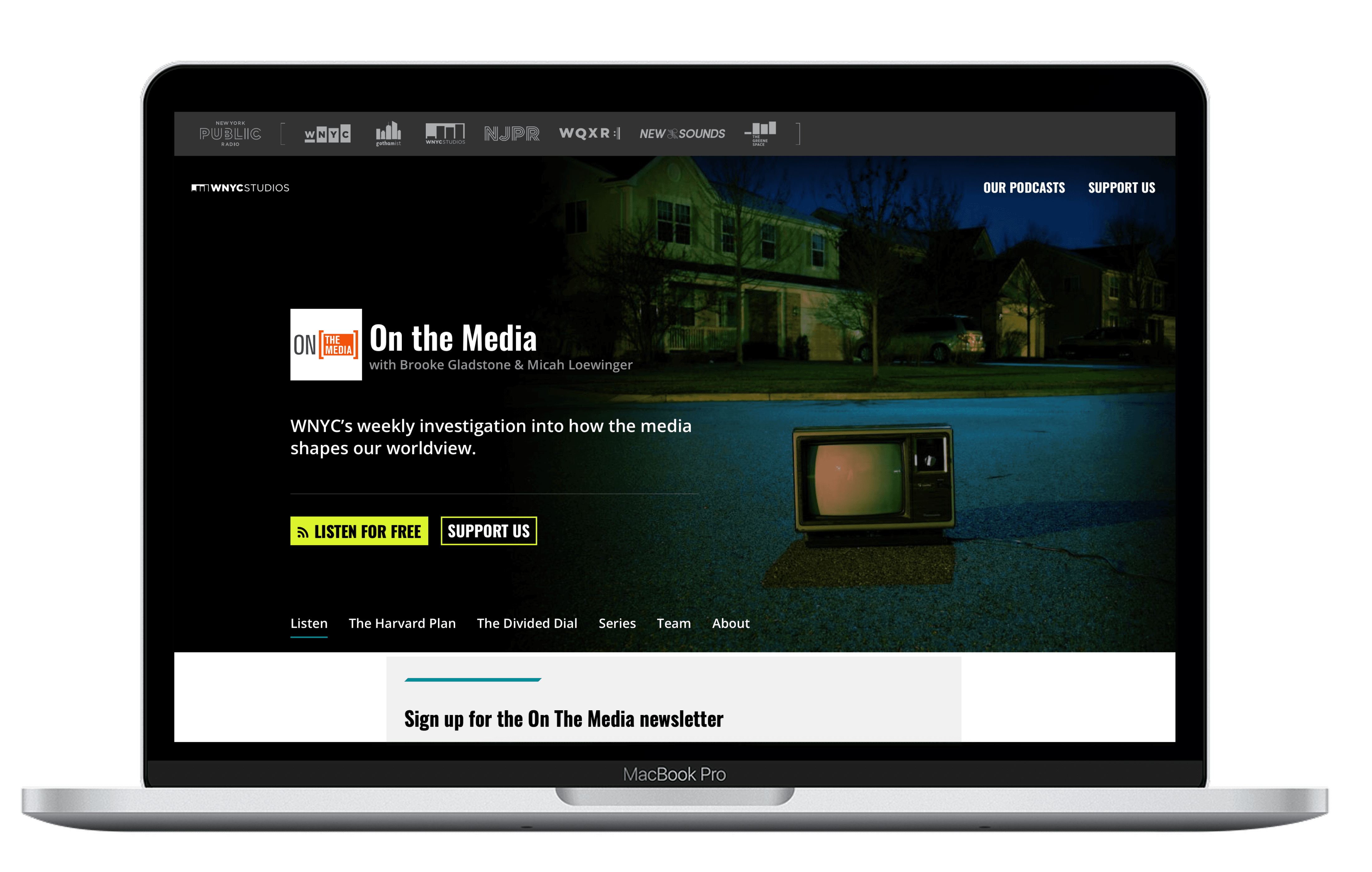
On the Media (OTM) has long been renowned for its compelling media analysis. However, they have recently recognized a significant challenge: their audience base was largely stagnant and loyal, indicating a lack of growth and failure to attract new listeners. OTM required strategies to successfully diversify and expand its reach beyond its existing core followers.
The Problem
OTM's deep analysis was trapped in an old, radio-first world. The core challenge was how to make this authoritative brand relevant to younger users in a fast-paced, scroll-driven digital environment dominated by short-form video.
👨🦳 Older Generation
The audience of the older generation was stagnant and loyal.
Goals
Personas
I developed two detailed listener personas and mapped their journeys. Understanding their needs—especially for quick utility and easy scanning—was the backbone of our whole content plan.

Domino
42, Journalism Professor
A heavy news consumer who needs high-quality, credible content for his teaching materials.
He needs to find specific, trustworthy content quickly for his media courses. He often compares how national vs. local media cover stories.
Pain Points
Finding specific segments inside OTM's archives is hard.
It is difficult for him to locate the quotes in the transcript with the audio resources.
Riley
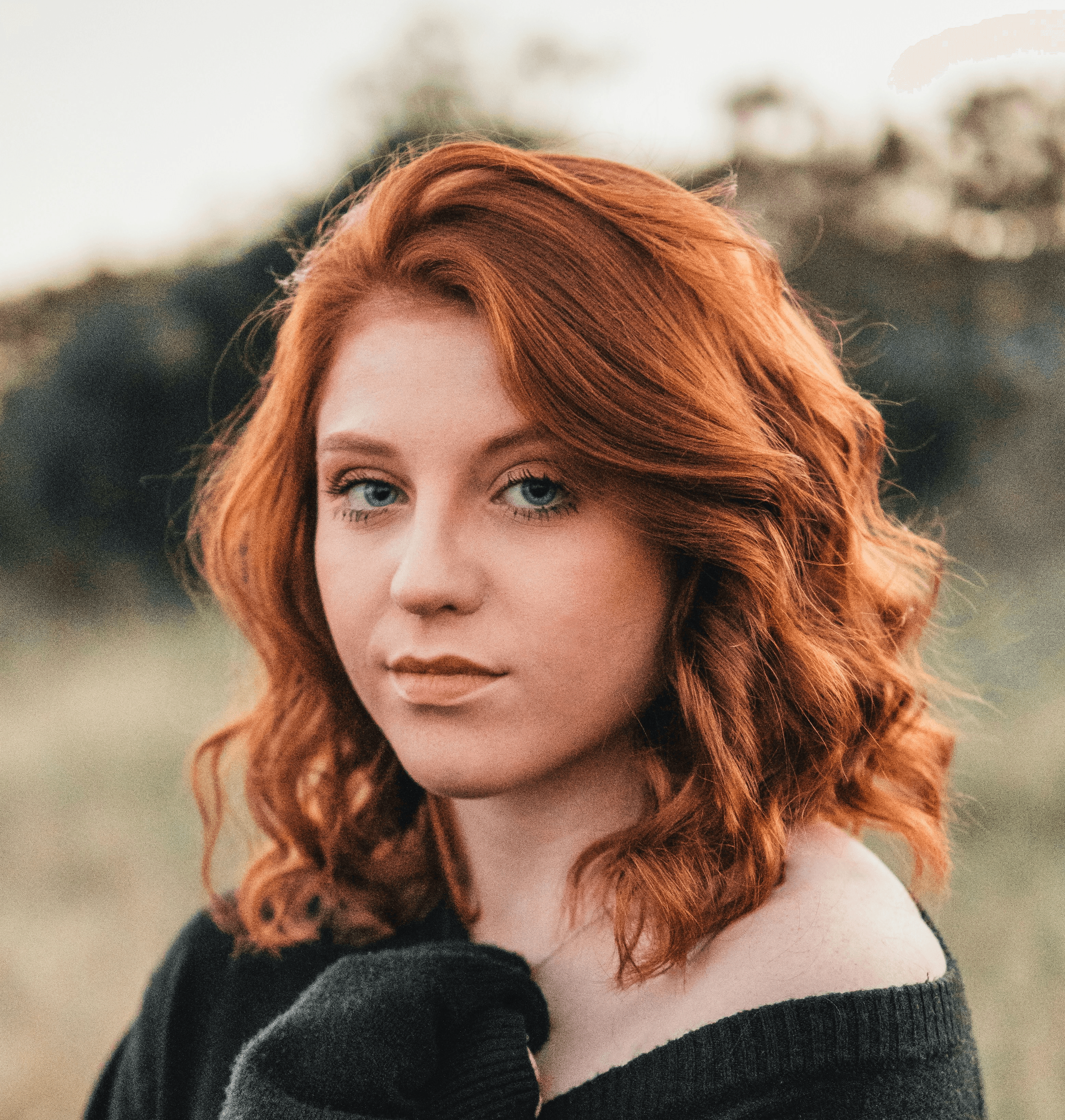
22, Digital Native
She is glued to short-form video (Reels, TikTok). She prefers to scroll through content quickly, gathering information through captions and visual cues.
Needs instant utility and shareable, bite-sized "Aha!" moments. Only engages deeper if the first 15 seconds of a clip are extremely relevant or high-impact.
Pain Points
Too much effort is required to verify sources for credible analysis.
If a clip sparks interest, there is no clear path to the original, trustworthy source, leaving her knowledge incomplete.
Competitive Analysis
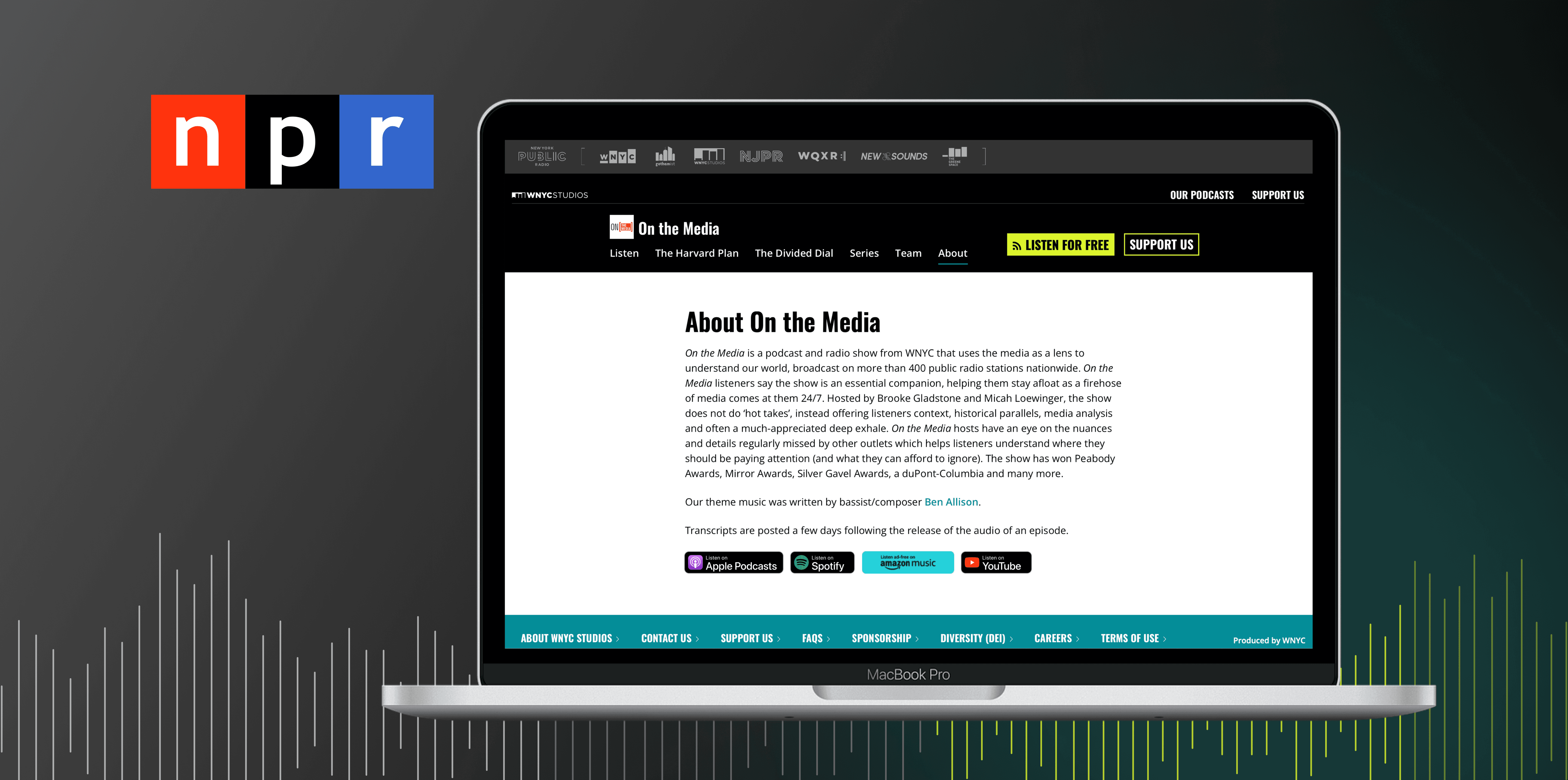
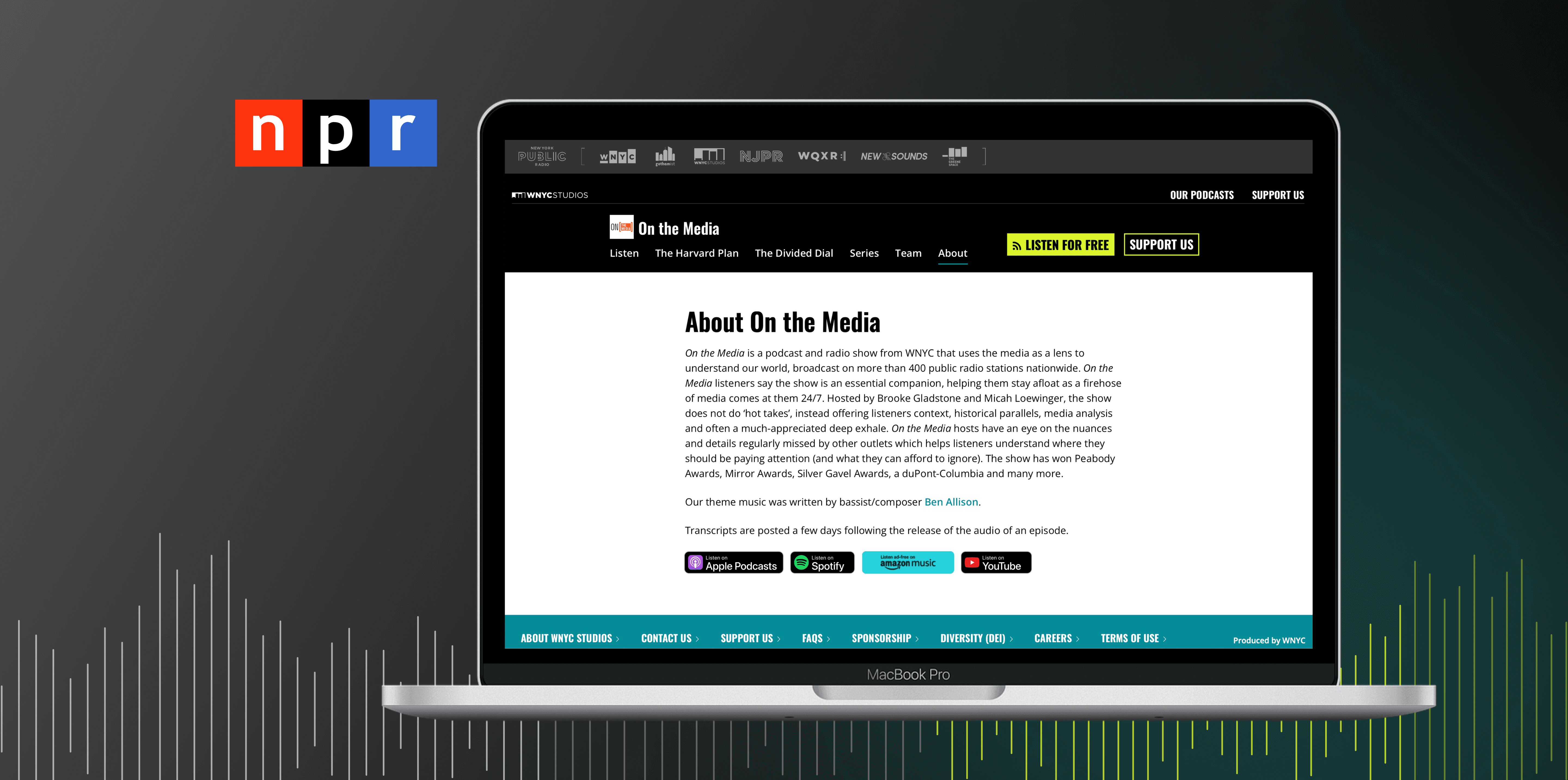
To define OTM's unique digital niche, we analyzed the content strategies of its parent and sibling organizations, NPR (national) and WNYC (local/regional). This clarified the market gaps OTM could fill.

Role: National Media
Strategy: Be Fast & Broad
NPR is the national producer of high-quality and trustworthy news and cultural programs for US public radio stations.

Role: Local/Regional Media
Strategy: Local Focus & Creative
WNYC is a leading member station in New York City that produces influential local and national content, including popular podcasts.
Content Audit & Usability Testing
We conducted an internal content audit and usability testing on OTM's website to identify specific friction points preventing users like Riley and Domino from engaging with the content. The data showed clear failures in mobile and archival usability.
👂 Abandonment on Long Audio Content
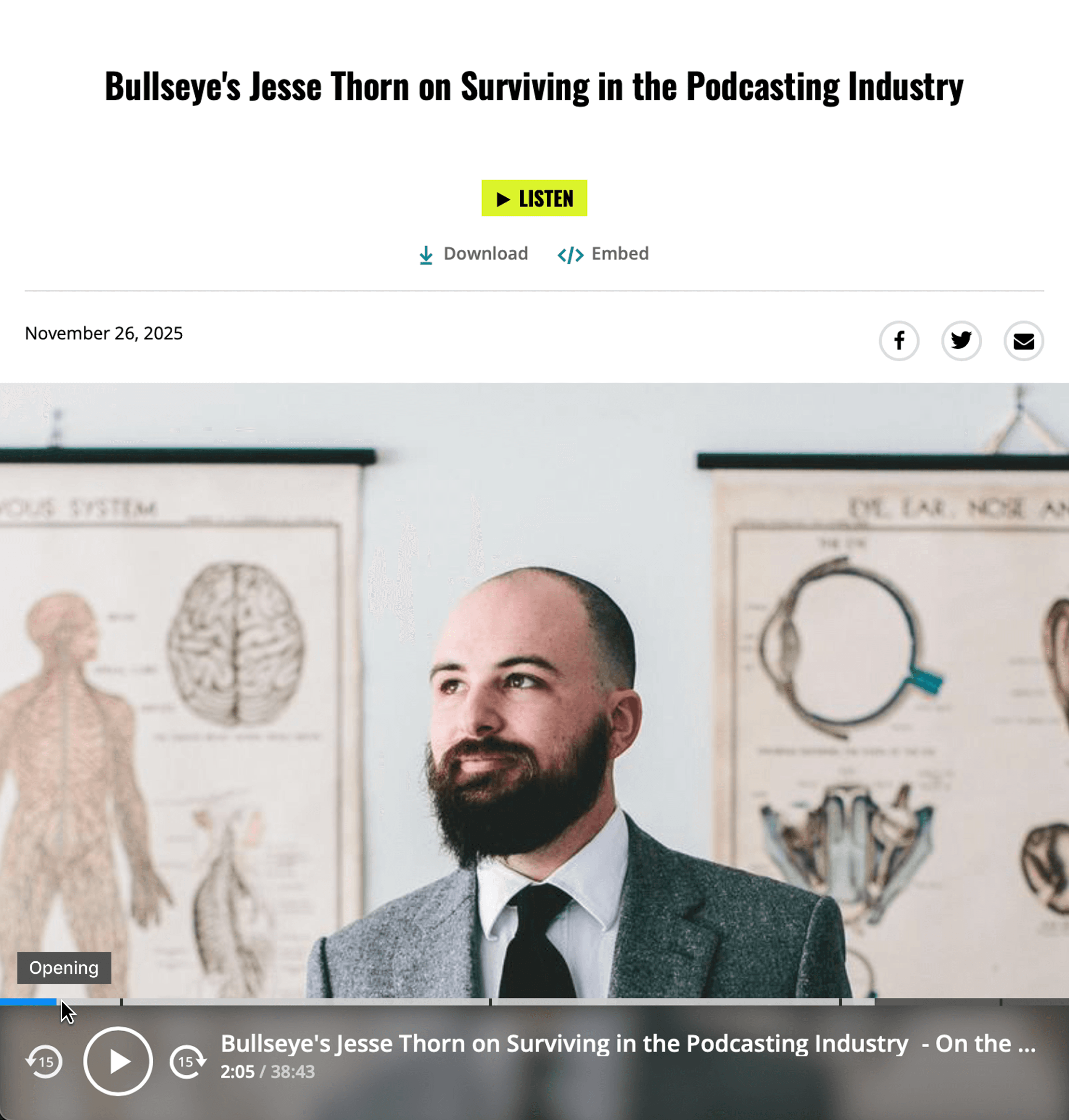
Some participants abandoned the episode because the lack of chapters or markers prevents quick content "scanning" of the long audio.
❌ Incomplete Podcast Distribution Listing
The official website fails to mention major podcast platforms (Apple Podcasts, Spotify, etc.), severely limiting audience reach and platform choice.
👀 Insufficient Content Visibility
Underutilization of platforms like Instagram Reels and YouTube Shorts limits discovery among new and younger audiences.
🗂️ Lack of Segmentation in Audio
Lack of time-stamped chapters means transcripts cannot synchronize with audio, hindering quick navigation and consumption.
Key Decision
Given the constraints of a small, radio-focused team and limited resources, my strategy was not to propose a massive website redesign or platform overhaul. Instead, I focused exclusively on Low-Effort, High-Impact changes that would maximize results with minimal burden on existing staff.
👀 Maximize Exposure (Social)
Post short-form content on more social channels to exponentially increase the OTM's visibility to potential and younger audiences.
🖥️ Improve Accessibility (Website)
Focus on minor UX/UI tweaks that address major usability friction points and improve the accessibility of deep content for all users.
The Solution
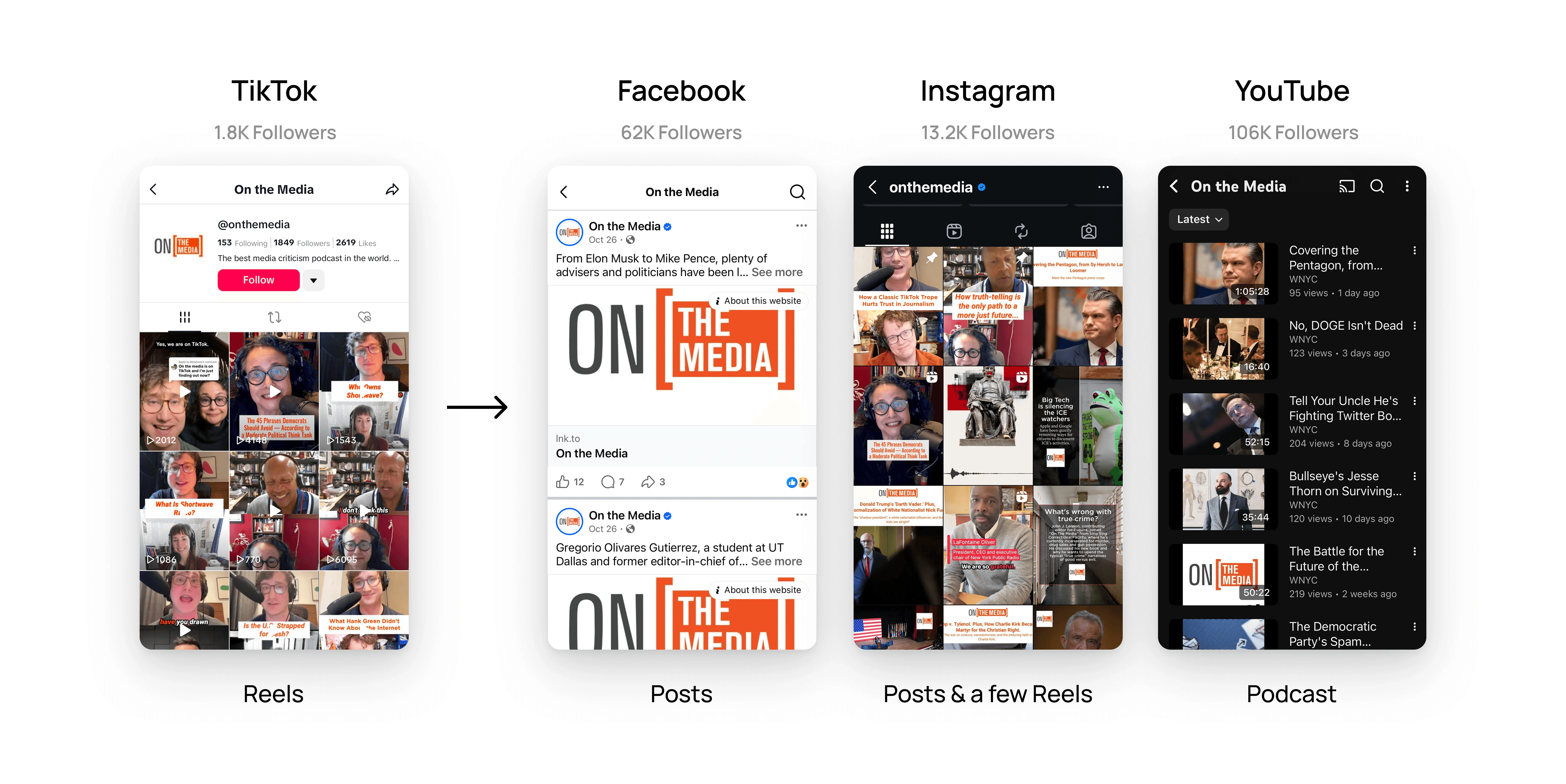
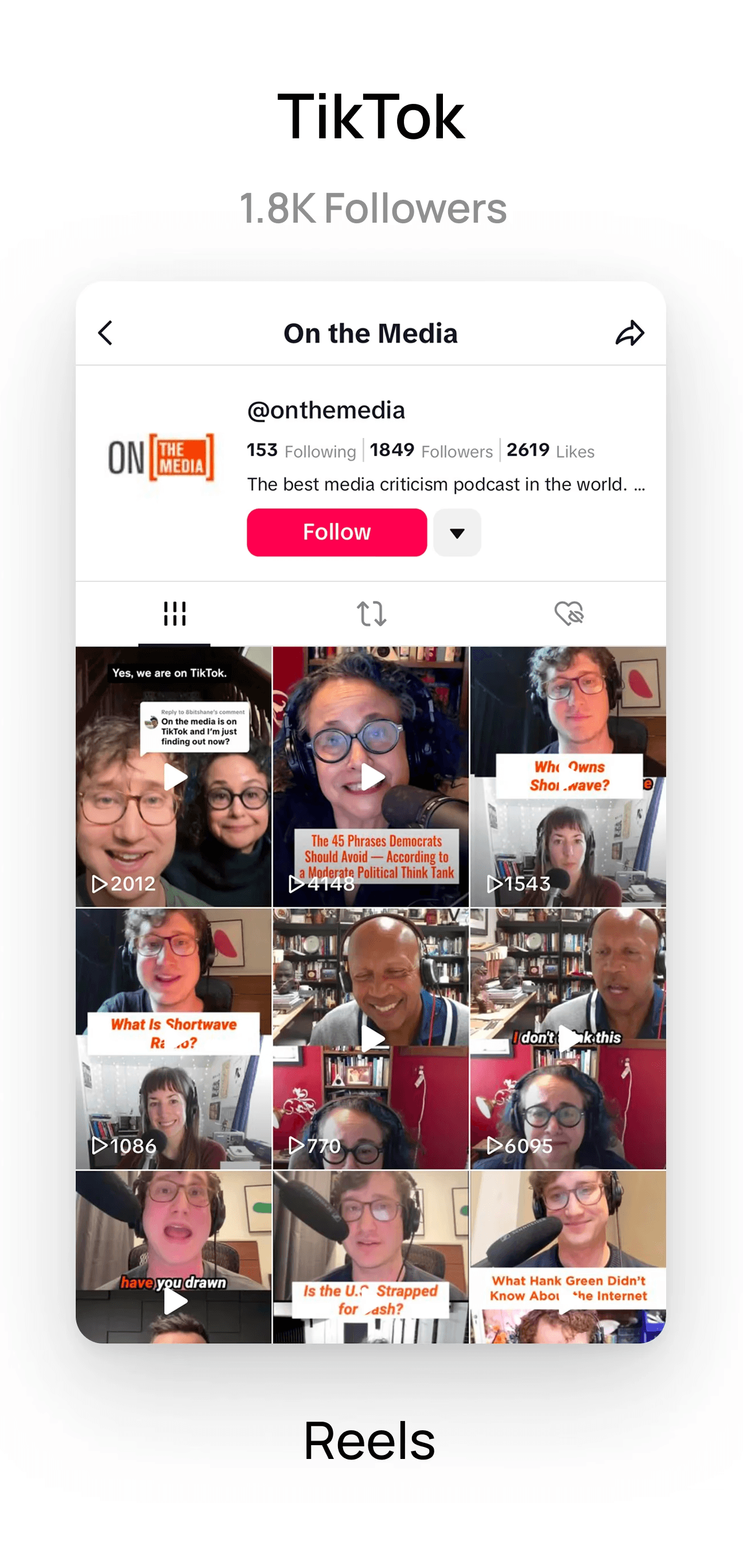
Syndicate TikTok Reels to Facebook, Instagram, and YouTube to leverage large existing follower bases (10x current) and exponentially boost visibility among younger audiences.
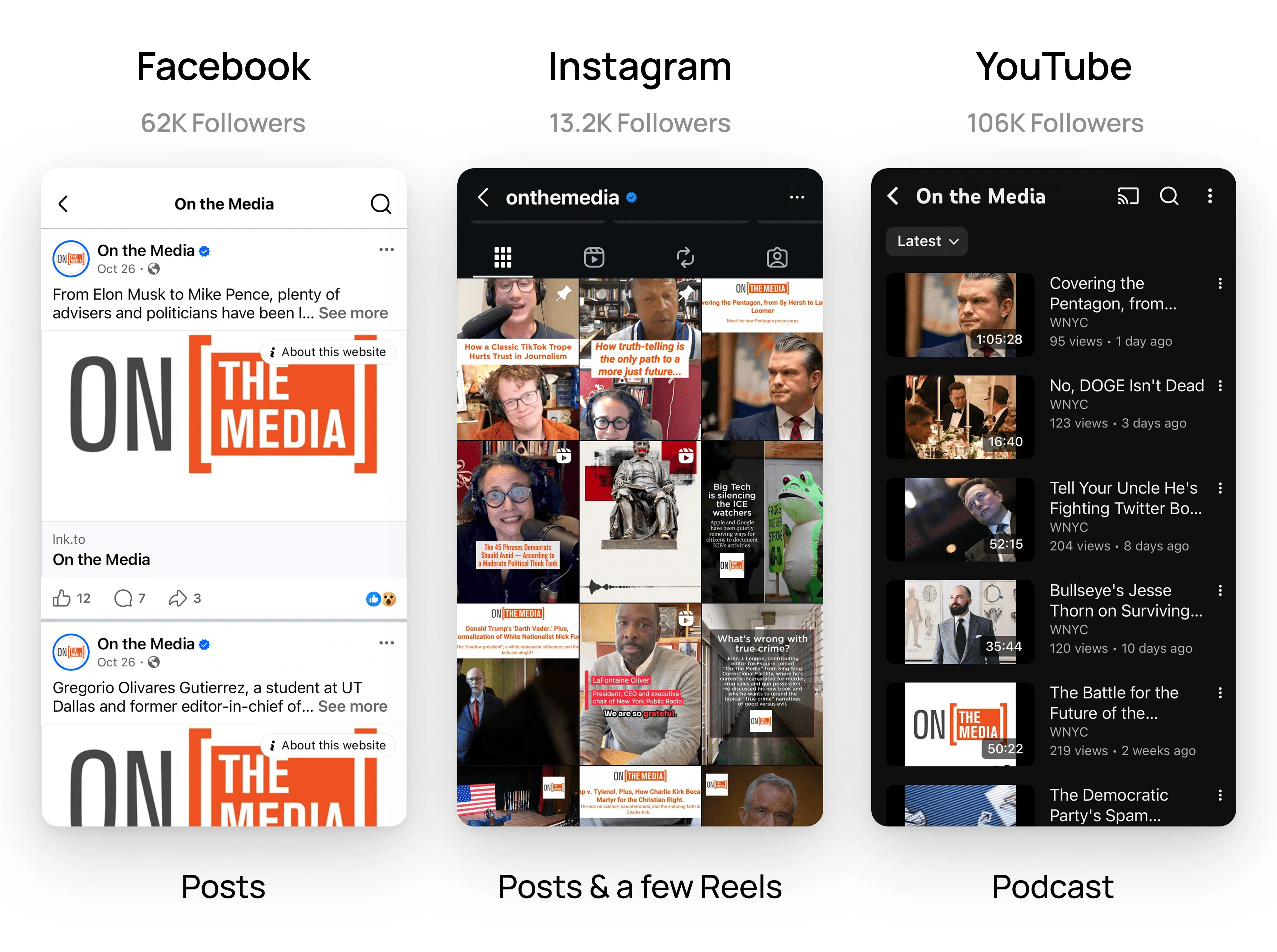
Mention major podcast platforms (Apple Podcasts, Spotify, YouTube) to access OTM's podcasts on their about page. Therefore, the audience can listen to the podcast on their preferred platforms.
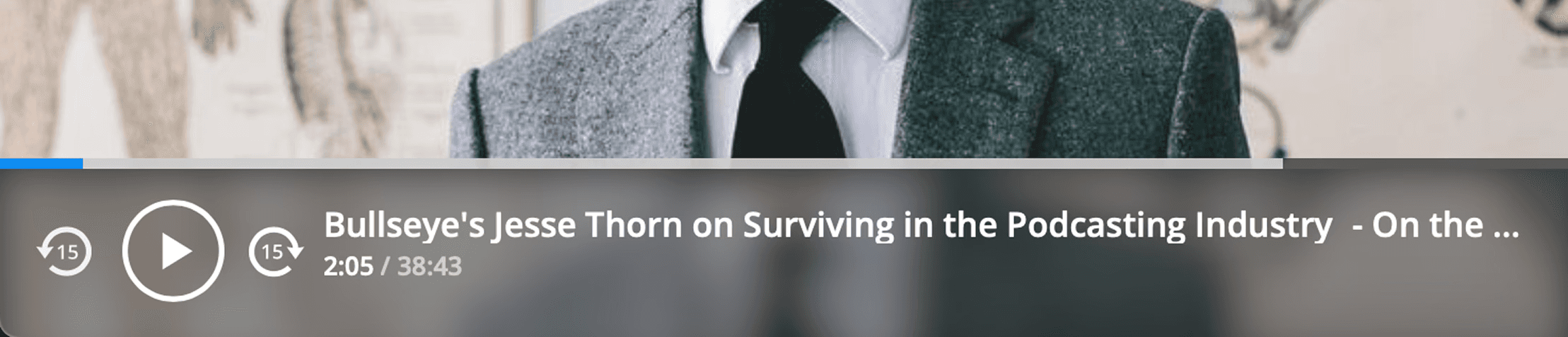
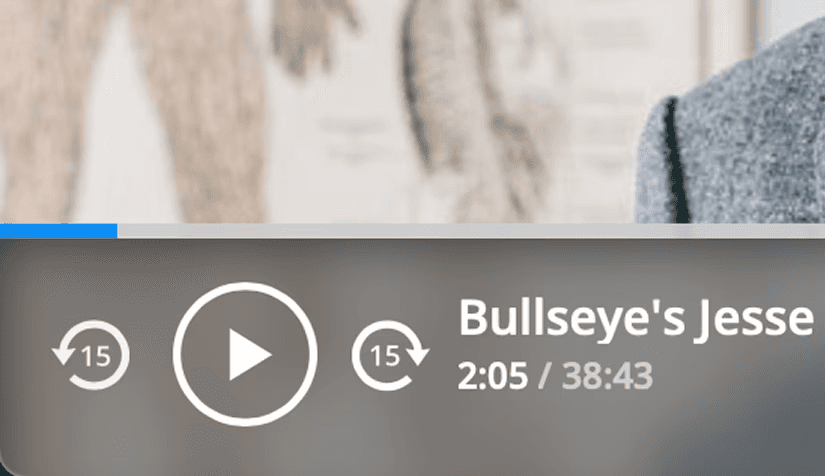
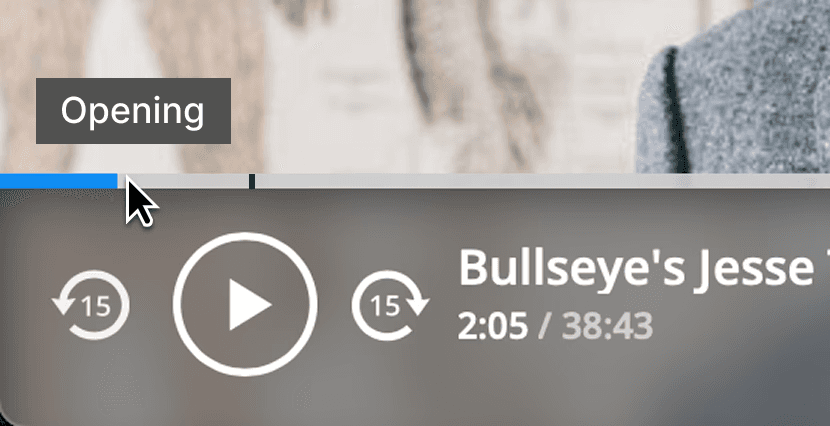
Implement segment names on the progress bar. This feature will serve as navigation for audio, allowing users to quickly grasp where they are in the content and easily jump to different sections without losing their place.
Impact
This cross-platform short-form video strategy has created an exponential impact on content expansion. Total Potential Reach surged from 1.8K followers to 183K, achieving a remarkable growth of over 100%. This strategy transforms content success from a single-platform, arbitrary event into a sustainable and predictable Growth Flywheel, maximizing exposure and accelerating brand awareness and business objectives.
Maximum Audience Size
Estimated Exposure
Retrospective
Initially, I considered modifying some podcast content, either by changing its length or editing it into videos. However, considering the small team size and the already tight workload, significant changes—even if effective—would be difficult to implement. Therefore, I learned how to adopt the principle of 'Minimum Production Cost, Maximum Content Reuse,' allowing us to bypass the expense of new content exploration by systematically reusing proven successful TikTok assets.